An unanswered invitation is an administrative problem, not evidence that someone does not care. The message may have been lost, the household may be coordinating travel or a guest may be unsure how to explain a difficulty. A useful reminder makes replying easier while leaving room for a private conversation.
Plan the follow-up sequence before sending invitations. You need a guest response deadline, the caterer’s actual final-number deadline and a modest buffer for reconciliation. Those dates depend on your agreements and event, not on a universal etiquette timetable. Never invent flexibility that the catering contract does not offer.
💬 Use fewer, clearer messages
| Stage | Purpose | Suggested approach |
|---|---|---|
| Before the guest deadline | Offer a helpful nudge if appropriate | One short message with the reply route |
| After the deadline | Resolve missing responses | Personal contact through an established channel |
| Before the contractual cutoff | Explain what happens next | A clear final reply date without blame |
| After closure | Keep records consistent | Record the agreed status and stop repeated prompts |
Emily Post’s invitation guidance stresses the importance of responding promptly and addresses missing replies. That supports the need to seek an answer, but it does not make public reminders, repeated automated messages or guilt useful. Your tone should reflect the relationship rather than treating relatives like overdue invoices.
A sequence with illustrative dates
Assume a fictional wedding has a guest reply date of 1 September and a caterer cutoff of 12 September. The couple chooses 6 September as the point for personal follow-up and 9 September as a final request date. These dates are illustrative assumptions, not a recommended interval for every supplier or destination.
The first message could say: ‘We are confirming wedding plans and would love your reply by 1 September. You can use this link or reply directly to me. Please let us know if you need to discuss arrangements privately.’ After the deadline, a personal message might read: ‘I am checking that the invitation reached you. Can you let me know whether you will be joining us? Our caterer needs the final list soon.’
If there is still no response, explain the practical consequence kindly: ‘We need to close our numbers on 9 September. If we have not heard by then, we will plan on you not attending. Please contact me if something has gone wrong with the reply process.’ Before sending this, make sure the couple genuinely agrees with that policy and can apply it consistently.
Follow up without overcollecting
- Check that the invitation was delivered to the correct person and address.
- Confirm the master list does not already contain a reply through another route.
- Send one concise reminder privately, with the event and deadline identifiable.
- Offer an easy direct reply for anyone struggling with the form.
- Escalate to a personal conversation only when appropriate to the relationship.
- Record the response, unresolved issue or closure decision in one place.
Do not copy the whole guest list into a visible group message. Avoid asking someone to explain financial, health or family circumstances in writing just to decline. If using a messaging platform, respect its rules and applicable local communication requirements. Familiarity with a guest does not justify adding them to unrelated promotional lists.
When a simple reminder is not enough
A guest may need to know about access, childcare or dietary arrangements before deciding. Assign that question to the relevant person instead of sending the same response link again. For a food allergy, the next step may be a conversation with the caterer, not an organiser’s reassurance.
If your form is causing repeated problems, inspect it. W3C recommends clear labels, useful error messages and confirmation of successful completion. A broken or inaccessible form can look like guest indecision when the problem is actually the system.
The takeaway is to make the decision easy and the boundary clear. A short, humane sequence protects your planning deadline without turning an invitation into a test of affection.
Sources and further reading
Photograph credit
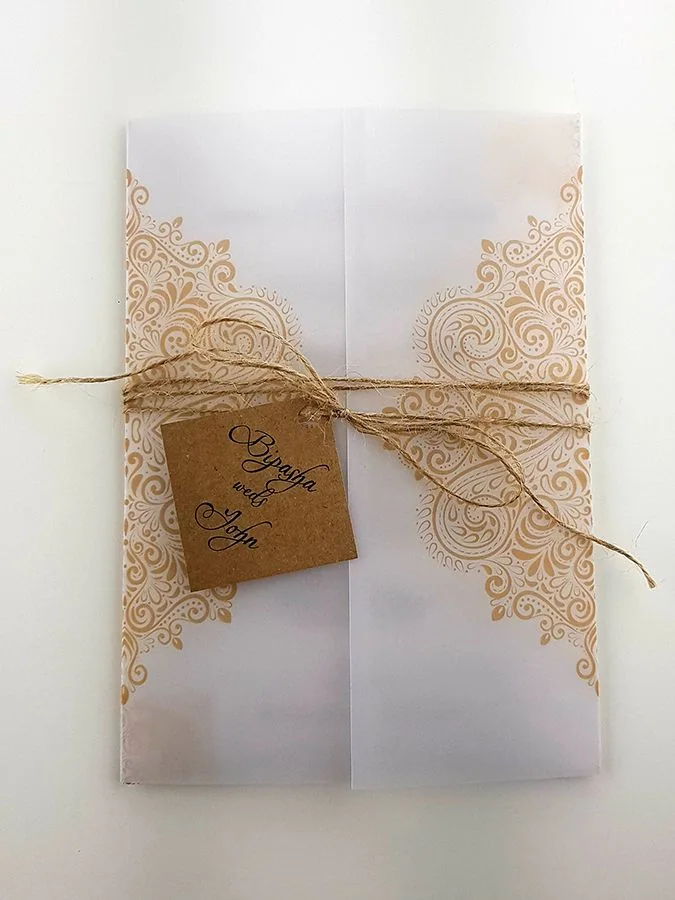
A translucent wedding invitation with ornate gold detailing. Photo: Emilyjones1, Shadicards Vellum Wedding Invitation abc 984 c.jpg, CC BY-SA 4.0. Resized and converted to WebP; the image remains available under its original licence. This is an illustrative photograph, not a Vowlinora case study or a photograph of the worked example.
