
Flowers can be well prepared in the studio and still arrive in poor condition if transport and setup are improvised. A crowded car, an unsecured vessel or a long wait in an unsuitable room can undo careful work. The solution is a clear handoff with the florist, not a universal temperature tip from social media.
Ask who is responsible from collection to final placement. Full-service delivery, collection by the couple and a friend transporting small arrangements are different scopes. If you choose collection, tell the florist about the vehicle, journey and destination so they can decide what instructions and packaging are appropriate.
🚚 Map each handoff
| Stage | Confirm | Named owner |
|---|---|---|
| Collection | Time, packing and condition check | Florist and collector |
| Vehicle loading | Stable placement and suitable capacity | Agreed transport lead |
| Journey | Environment and route | Transport lead |
| Unloading | Access, trolley or carrying assistance | Venue and floral team |
| Holding and setup | Appropriate space and care instructions | Florist or designated setup lead |
Chrysal’s professional guidance identifies climate control, packaging, transport time and appropriate post-harvest treatment as important to cut-flower quality. Its guidance also notes that flower type and cultivar matter. That is why one cooling instruction should not be applied indiscriminately to every arrangement.
A worked logistics scenario
Assume a fictional collector plans to leave the florist at 10:00, travel for 35 minutes and spend 20 minutes unloading and placing small arrangements. Under those assumptions, placement finishes at 10:55. If venue access begins at 11:00, the plan contains a conflict rather than five spare minutes.
The collector should not solve that conflict by leaving flowers unattended outside or waiting in an unsuitable parked vehicle. Instead, the florist and venue agree a revised collection time or another authorised holding arrangement. This is illustrative scheduling arithmetic, not a recommendation for a particular journey length.
The same conversation checks whether the boxes fit the vehicle and whether the vessels contain water. The florist should specify how they are supported and handled. A passenger should not be expected to balance an unstable arrangement for the whole trip.
Prepare in a sensible order
- Confirm whether delivery or collection is included in the floral agreement.
- Tell the florist the actual transport and venue conditions.
- Agree packing, support and handling instructions.
- Check the venue’s loading point, stairs, doors and access time.
- Assign an available person to receive the flowers.
- Inspect the delivery with the responsible team and report problems promptly.
- Follow the florist’s placement and care instructions through the event.
Take care with decorative mechanics and hired vessels. Ask before removing packaging, ties or supports that may be part of the transport system. Conversely, make sure any packing that must be removed before display is clearly identified. A labelled placement plan can prevent arrangements being left in the wrong room.
Care products are not interchangeable
If flower food is supplied, use the product’s instructions. Chrysal’s manufacturer guidance recommends measuring the correct amount of water and warns that inaccurate concentration can affect flowers. Do not substitute a guessed household mixture or assume that more product provides more protection.
The RHS recommends clean containers and cooler positioning away from heat. Apply those broad principles alongside the florist’s specific advice, not instead of it. Do not improvise specialist treatments, freezing or a domestic refrigerator setup without checking suitability for the actual materials and environment.
Keep treatments and flower-handling work separate from catering areas. If flowers will be placed near food or on a cake, that needs a specific discussion with the florist and food provider; decorative suitability is not the same as food-contact suitability.
The takeaway is to make transport part of the floral design scope. A realistic schedule, suitable packing and named responsibility are more dependable than a last-minute care hack.
Sources and further reading
Photograph credit
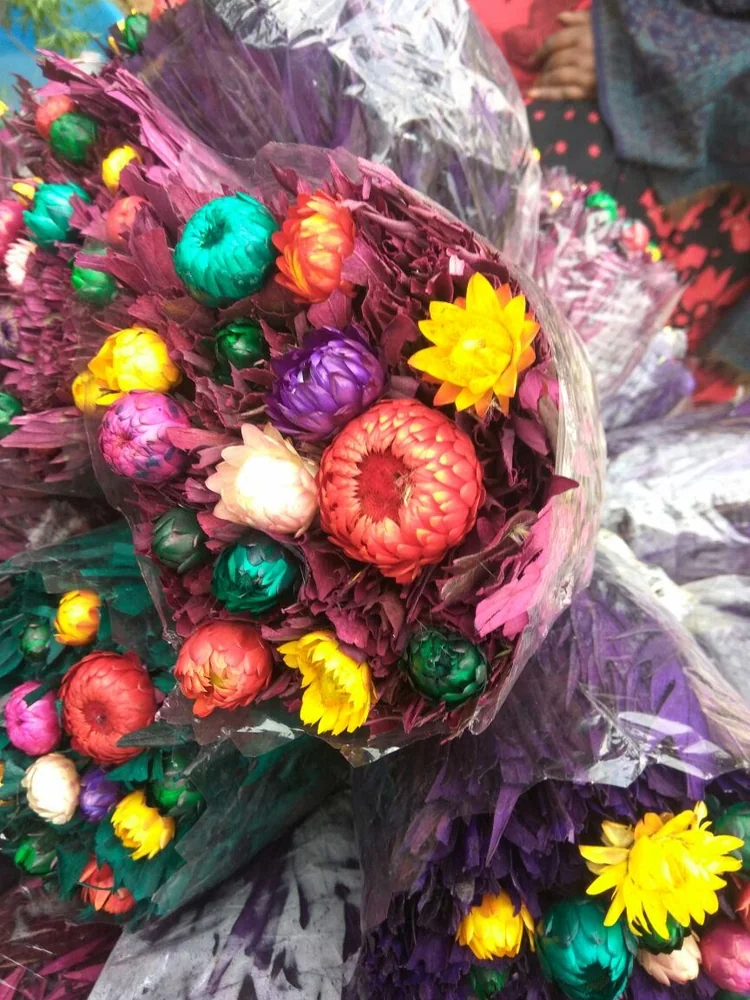
Colourful wrapped bouquets displayed together. Photo: Devaki surya, Bouquet for wedding.jpg, CC BY-SA 4.0. Resized and converted to WebP; the image remains available under its original licence. This is an illustrative photograph, not a Vowlinora case study or a photograph of the worked example.
