A venue photograph is a record of one arrangement, one viewpoint, and one moment. It does not show how your ceremony will look at a different hour or what an evening reception needs. When visual memories matter, involve your photographer in a lighting conversation before committing to a difficult space. You are not trying to become a lighting technician; you are identifying permissions, limitations, and realistic options.
📷 Separate the three lighting jobs
Ceremony lighting needs to support the event without distracting from it. Portrait lighting may offer more flexibility because people can move or pause. Reception lighting must work alongside dinner, dancing, and safe circulation. A window that looks wonderful for portraits may place seated guests in glare during the ceremony. A dark reception may feel atmospheric but require additional photographic lighting that the venue restricts.
Nikon’s professional wedding-photography feature demonstrates how a photographer uses window light, reflectors, and flash in different locations. It supports a practical point: the venue and the photographer’s approach work together. It does not establish that every photographer can reproduce a particular image or that any camera can overcome every restriction. Ask your own professional what the space requires for your priorities.
Make a light-and-permission worksheet
| Event area | Observe | Ask |
|---|---|---|
| Ceremony | Window direction and planned seating | Can the arrangement change if necessary? |
| Portraits | Nearby sheltered alternatives | Which areas remain available during the event? |
| Dinner | Existing fixtures and dimming controls | Who controls them and when? |
| Evening | Equipment positions and guest routes | Are stands, flash, or added lights restricted? |
Visit near a relevant time if possible, while recognizing that season and weather will change the result. Take ordinary reference images with permission and note the date, time, and room arrangement. These are briefing materials, not a professional test or a promise of final image quality. Ask whether promotional photographs used additional equipment or areas that your booking will not include.
An illustrative ceremony adjustment
Assume a fictional venue offers a glass-walled ceremony room and a covered courtyard. A couple loves the room’s bright promotional images. Their photographer reviews the proposed ceremony direction and explains that the couple would stand against the brightest windows, while some guests would face strong light. This is a hypothetical professional conversation, not a test of a real venue.
The venue permits a different orientation and can adjust some blinds without obstructing access. The couple prefers that arrangement even though it changes the backdrop. They also confirm a sheltered portrait area for rain. The result is not a guarantee of perfect photographs; it is a clearer shared plan that respects comfort, available light, and the photographer’s working method.
Do not let equipment become an afterthought
If additional lighting is proposed, have the photographer coordinate it with the venue and relevant operators. HSE’s event-management guidance emphasizes cooperation and control of risks across work activities. Equipment, power, and cables need competent handling, and guest routes must not become convenient storage areas. A couple should not solve a dark corner by improvising electrical work or moving safety lighting.
- Tell the photographer which moments and visual qualities matter most.
- Share the venue’s actual room plan and restrictions.
- Ask about suitable alternatives for poor weather and evening conditions.
- Confirm who can authorize changes to house lighting.
- Keep guest access, visibility, and comfort ahead of a single reference image.
Some compromises will remain. A venue may prohibit flash during a ceremony, restrict access to a photogenic staircase, or share outdoor space with other visitors. Decide whether those limits fit your priorities before booking rather than expecting the photographer to negotiate them on the day. Choose a workable relationship between place, permissions, and professional approach, not the assumption that the view alone will create the photographs.
Sources and further reading
Photograph credit
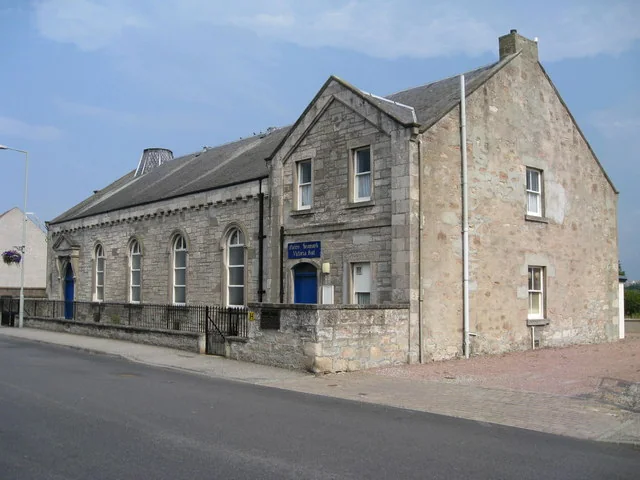
The exterior of Fishertown Seamans Hall. Photo: Peter Robertson, Fishertown-Seamans Hall – geograph.org.uk – 901419.jpg, CC BY-SA 2.0. Resized and converted to WebP; the image remains available under its original licence. This is an illustrative photograph, not a Vowlinora case study or a photograph of the worked example.
