
The final venue walkthrough is not another inspiration visit. Its purpose is to make the agreed event understandable to the people who will operate the building. A wonderful conversation with a sales contact is of limited use if the duty manager receives an outdated room plan. Treat this meeting as a handover: confirm the current version, identify unresolved items, and assign each one a responsible owner.
📝 Bring the event that is actually happening
Use the latest confirmed layout, supplier access requirements, room list, and relevant guest access arrangements. Remove superseded versions from the working pack so nobody has to guess which drawing applies. Keep personal information proportionate: staff need to know how to provide an agreed service, not every private detail behind it. Ask who receives the pack and who briefs people joining later.
HSE’s event-management guidance stresses coordination, relevant risk information, competent supervision, and monitoring during setup, the event, and breakdown. This is an operational framework, not a claim that every couple must perform a professional safety role. Your handover should make it easier for the venue and contractors to exercise their own responsibilities without contradictory instructions.
Walk decisions to their physical locations
| Location | Confirm | Owner |
|---|---|---|
| Arrival point | Correct entrance, signage, and drop-off | Venue arrival contact |
| Ceremony room | Current layout and communication arrangements | Venue and ceremony team |
| Service areas | Deliveries, storage, and clear routes | Venue and relevant supplier |
| Quiet or private room | Availability, access, and no competing use | Duty manager |
| Departure | Collection point and property handback | Venue closing contact |
Stand where guests will arrive and check that the directions match. Open the door intended for the accessible route with the venue’s permission. Confirm which room holds personal belongings and who can enter it. Ask where supplier packaging goes and which areas must remain clear. These are concrete checks, not a request for the couple to inspect technical systems or certify compliance.
An illustrative version-control problem
Assume a fictional venue has two ceremony layouts in circulation. The first places the musicians near the entrance; the revised version moves them to support a guest’s communication requirements. Catering has received the first drawing, while the audio team has the second. The final walkthrough reveals that the service route and equipment positions now conflict. No incident has occurred; the value is finding the discrepancy before setup.
The venue manager issues one dated plan, confirms the relevant professionals approve the arrangement, and identifies who will check it after equipment arrives. The couple receives a short action record rather than a collection of separate reassurances. These assumptions illustrate an information problem, not a real event review or a technical endorsement of any layout.
Ask what happens when something changes
A final plan still needs a change process. Who decides if weather requires the indoor arrangement? Who can authorize a different delivery route? What happens if an agreed room is unexpectedly unavailable? HSE’s emergency guidance emphasizes clear roles and communication. Ask the venue to explain its established arrangements, including how guests with disabilities are supported, without attempting to write an improvised emergency plan yourselves.
- Read out unresolved items and give each one an owner and confirmation point.
- Ask the duty manager to identify any remaining operational conflict.
- Confirm the contact method that will work onsite.
- Record material changes in the agreed documents.
- Send a concise handover summary and ask affected teams to acknowledge corrections.
Close with departure and restoration, not only arrival. Confirm who gathers personal belongings, where hired equipment remains for collection, and how the venue records the condition of returned spaces. Avoid assigning technical dismantling or heavy lifting to guests as an informal last-minute solution. Responsibilities should remain with people equipped and authorized to perform them.
The walkthrough cannot eliminate every surprise, and it should not become an endless redesign. Its success is simpler: the venue’s working team can describe the same event you expect, find the current information, and act on unresolved decisions without repeatedly interrupting the celebration. A short, accurate handover is more useful than an impressive folder nobody knows how to use.
Sources and further reading
Photograph credit
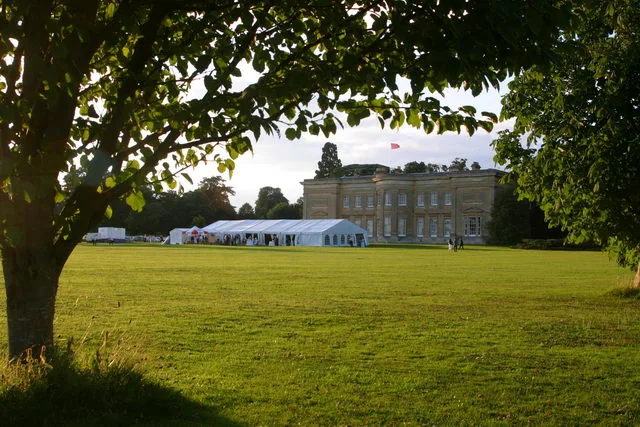
Spetchley Hall viewed across its landscaped gardens. Photo: Mike Dodman, Spetchley Hall gardens – geograph.org.uk – 1079105.jpg, CC BY-SA 2.0. Resized and converted to WebP; the image remains available under its original licence. This is an illustrative photograph, not a Vowlinora case study or a photograph of the worked example.
