Adding a wedding content creator can provide a different kind of record, but job titles do not define a package. A photographer may offer short clips; a content creator may supply edited stories, raw material, or something else entirely. Decide what you want to receive, then map who captures it and how they work together. More cameras create more coordination needs as well as more potential images.
📱 Start with outputs, not labels
Write down the results that matter: printed photographs, a complete gallery, a ceremony recording, short vertical clips, quick private sharing, or a curated public post. These are different purposes. Ask each supplier which ones they deliver and what is not included. Do not assume that a fast turnaround means finished editing or that raw material is ready for public use.
Nikon’s professional wedding-photography feature illustrates how photographic work can involve deliberate use of location, lighting, and direction. It is one professional approach, not the definition of all photography. The practical implication is that another camera team should understand when a photographer is directing a sequence and when a moment is unfolding without direction.
Build a role-and-access map
| Issue | Agree | Avoid |
|---|---|---|
| Deliverables | Files, edits, orientation, and intended use | Assuming a title describes the package |
| Position | How teams avoid obstructing each other | Competing instructions during vows |
| Direction | Who leads arranged sequences | Repeatedly recreating emotional moments |
| Privacy | Capture and posting boundaries | Automatic public access to private rooms |
| Delivery | How and when usable work arrives | Equating quick clips with complete coverage |
Have the suppliers speak directly about ceremony positions, equipment, private areas, and any restrictions imposed by the venue or ceremony leader. The couple should not have to arbitrate competing directions while exchanging vows. Make sure the agreement remains flexible enough for actual conditions, but clear enough that one supplier’s promised shot does not depend on obstructing another’s work.
An illustrative overlap problem
Assume a fictional couple wants formal portraits and short behind-the-scenes clips. Their photographer plans a brief private portrait sequence, while a content creator expects to record the entire interaction close beside the camera. The couple realizes that privacy and proximity have not been discussed. They ask whether selected clips can be captured without making the whole sequence a performance.
The teams agree which portions are open to capture, how they will position themselves, and who directs. The couple also declines public posting from the getting-ready room until specific images are approved. These assumptions illustrate coordination, not a claim that this arrangement is standard, legally required, or suitable for every creative team.
🔒 Keep public posting separate
EFF’s social-network guidance emphasizes audience settings, identifying image details, location, and tagging. A clip can reveal guests’ faces, room numbers, documents, or private conversations beyond its intended subject. Ask who can access files, whether suppliers use them in portfolios, and what approval process applies before public posting. Guests’ privacy preferences should reach every image-making team, not only the main photographer.
- List the outputs you genuinely expect to revisit.
- Check existing suppliers for overlap before adding another service.
- Ask teams to agree working positions and direction privately.
- Define private spaces and moments where cameras stop.
- Confirm delivery, publication, storage, and removal-request processes in the actual agreements.
Do not give a supplier your main social-account password simply because quick posting is attractive. Ask for a safer agreed workflow appropriate to the service, and retain control over your account and audience. No workflow can promise that publicly distributed material will never be copied.
A content creator can be useful when the outputs are distinct and the collaboration is workable. It may be unnecessary when existing coverage already meets your needs or you prefer fewer observers. The decision should follow the memories you want and the experience you want while making them, not an unsupported claim that every contemporary wedding now requires another camera.
Sources and further reading
Photograph credit
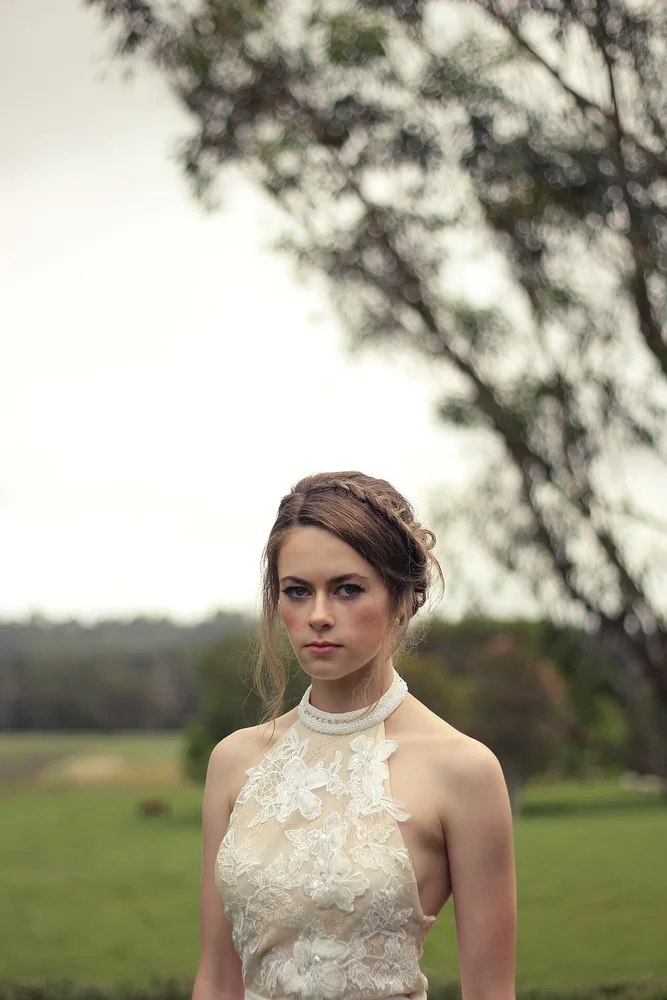
A bride in a lace dress in a softly focused outdoor setting. Photo: Christopher Campbell chrisjoelcampbell, Country Chic Wedding (Unsplash).jpg, CC0. Resized and converted to WebP; the image remains available under its original licence. This is an illustrative photograph, not a Vowlinora case study or a photograph of the worked example.
