A preloved dress listing can show the gown beautifully while leaving important questions unanswered. The original size, the year purchased and a full-length wedding photograph do not establish its present condition or whether it can be altered for you. Build a small evidence file before committing.
Stillwhite’s buying guidance recommends reading condition notes, asking about storage and cleaning, and requesting close-up photographs. Its alteration guide also highlights the importance of previous changes and spare fabric. Those are useful questions even if you purchase through another platform or a local seller.
🔍 Request current, specific information
Ask for recent photographs of the actual dress, not only manufacturer images or photographs taken before it was worn. Request the front, back, hem, underarms, fastening, lining and any disclosed damage. Keep the conversation within the platform’s recommended process where applicable.
- Confirm the exact designer, style and item being sold.
- Request current measurements and the method used.
- Ask what alterations were made and whether records or spare fabric remain.
- Review cleaning and storage history without treating it as proof of condition.
- Discuss repair feasibility with an appropriate gown specialist.
- Read the transaction, shipping and dispute terms before paying.
Do not assume the rights associated with a business sale apply identically to a private sale, or vice versa. Rules vary by jurisdiction and transaction. If a condition is essential to your purchase, clarify it in writing through the appropriate channel.
A worked shortlist decision
Assume an illustrative shopper comparing two listings for a similar design. Listing A has a clear alteration history and current hem photographs but an unresolved lining mark. Listing B appears pristine in the wedding photographs but provides no current measurements and has a substantially altered neckline.
| Issue | Listing A | Listing B |
|---|---|---|
| Current condition | Mostly documented; lining question remains | Current photographs required |
| Alteration history | Details available | Structural work needs explanation |
| Fit evidence | Compare supplied measurements with specialist | Do not infer from original label |
| Next step | Seek assessment of mark and fit | Request evidence before progressing |
This does not make A automatically safer or B unsuitable. It identifies what remains unknown. A lower price or appealing photograph should not be used to fill those information gaps with optimistic assumptions.
Ask about changes that are hard to reverse
Was the hem cut or folded? Was the back converted? Were cups, straps, sleeves or internal support changed? Has fabric been removed, and is any retained material included? A specialist can explain which answers matter for your intended adjustments.
Be cautious about promises that any dress can be taken in or let out by a fixed number of sizes. Construction and previous work vary. Ask for an assessment of this dress rather than a general rule.
For stains, odours or fabric changes, obtain advice from an appropriate cleaner before relying on removal. Do not test household products on a dress you do not own. Even after purchase, follow garment-specific care instructions and professional advice rather than attempting an unverified cleaning recipe.
Plan arrival and inspection
Confirm packaging, tracked shipping where appropriate, delivery arrangements and the process for reporting a problem. Photograph the package and garment on arrival if that is relevant to the platform’s process, while respecting the actual terms and deadlines.
Allow time for assessment, cleaning if appropriate and alterations before the date you need the dress. Immediate availability does not mean immediate readiness to wear. Arrange appointments based on real professional availability.
The useful takeaway is a decision supported by current evidence: what the dress is, what has happened to it, what remains uncertain and whether the remaining work is feasible for your budget and deadline.
Sources and further reading
Photograph credit
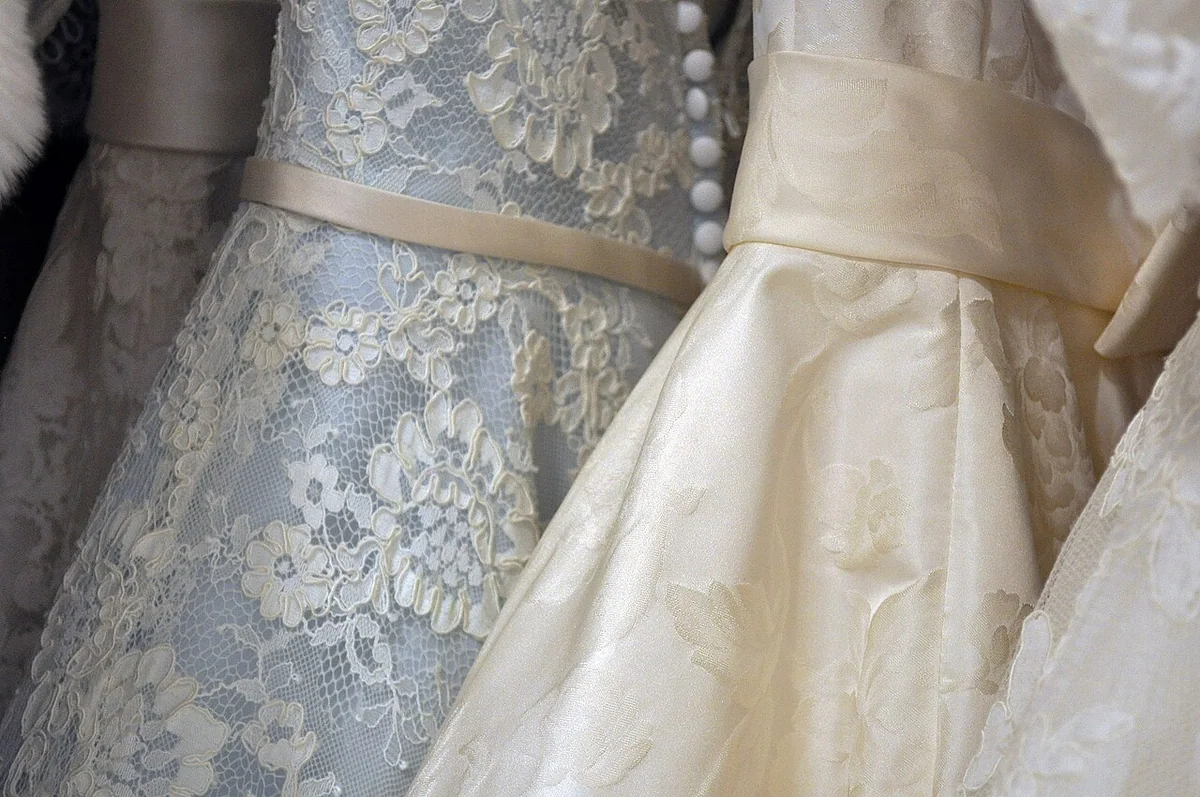
Close-up of lace and satin details on hanging wedding dresses. Photo: Anna Docking annaclare97, Wedding dress dreaming (Unsplash).jpg, CC0. Resized and converted to WebP; the image remains available under its original licence. This is an illustrative photograph, not a Vowlinora case study or a photograph of the worked example.
