
A getting-ready room can become a workplace, gathering space, wardrobe area, and photography set at once. That does not make every moment public. People may be changing clothes, managing medication, having an emotional conversation, or simply wanting quiet. Set boundaries before cameras and deliveries arrive so privacy does not depend on somebody finding the courage to interrupt.
🚪 Divide access from photography permission
Someone may be welcome in the room without being welcome to photograph it. Equally, a photographer invited to document finishing touches may not have permission to record changing, private messages, or every person present. Discuss the scope with all image-making suppliers, including anyone producing short social clips. Do not assume a camera phone feels less intrusive than a professional camera.
EFF’s social-network guidance explains that pictures can reveal identifying details and that sharing involves audience, tagging, and location decisions. Apply that concrete point to room images: documents, medication labels, phone screens, room numbers, and reflections may disclose more than the intended subject. A quick visual check before sharing is useful even when everyone pictured is comfortable appearing.
Use a room-boundary worksheet
| Boundary | Agree | How to communicate it |
|---|---|---|
| Entry | Who may enter and who knocks first | Brief suppliers and the venue contact |
| Camera access | Which moments are open to capture | Explain before cameras begin recording |
| Private interval | How someone requests a pause | Use a simple phrase without requiring explanation |
| Publication | Which images may leave the room | Keep capture and posting decisions separate |
Ask the venue whether the room is genuinely private or also a route for staff and other guests. If it is shared, identify a more suitable place for changing or sensitive conversations. Do not block required routes, lock people out of essential facilities, or improvise security measures that conflict with venue operations. The room’s actual use should match the boundaries you describe.
An illustrative moment of consent
Assume a fictional couple has invited a photographer to capture final clothing adjustments. A friend helping in the room prefers not to be photographed in their own getting-ready clothes. The couple tells the photographer in advance and agrees that the friend can step into another suitable area before that sequence begins. The friend is not asked to explain or accept being blurred later.
During a private conversation, somebody says the agreed pause phrase. All recording stops until the people involved say they are ready. These assumptions illustrate a workable process, not a claim that a particular contract or jurisdiction requires it. If professional publication rights are involved, discuss the actual agreement and seek appropriate local advice where needed.
📝 Make boundaries ordinary
- Tell everyone entering that privacy requests will be respected without debate.
- Ask suppliers what work space and access they genuinely need.
- Keep private documents and visible screens out of planned image areas.
- Agree where belongings can stay without obstructing access.
- Repeat the photography and posting instructions when a new person arrives.
Consider communication access too. W3C’s events guidance notes that people may have needs others do not anticipate. Someone may use a device for communication or need a quieter area to follow instructions. A rule designed to reduce filming should not accidentally remove that access. Ask privately what helps rather than treating every phone in the room as a camera.
There is no need to script every spontaneous interaction. The aim is to give people a clear way to say yes, no, or not now. Boundaries are especially useful when a meaningful moment is being staged for a photograph: someone can enjoy participating while declining to repeat an emotional exchange for content.
A private room cannot guarantee that no unwanted image will ever exist. What you can establish is a shared expectation, a clear stop signal, and a responsive team. The best getting-ready photographs should not require anyone to surrender the ordinary dignity of being off camera.
Sources and further reading
Photograph credit
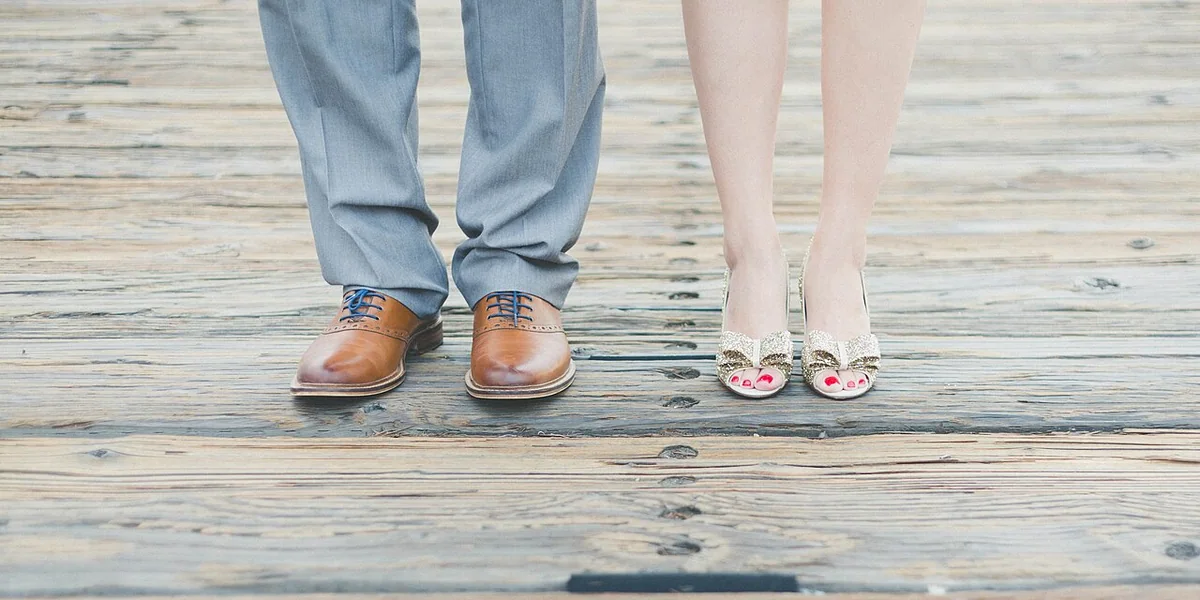
A wedding couple standing together in contrasting formal shoes. Photo: Josh Felise jfelise, Wedding day shoes (Unsplash).jpg, CC0. Resized and converted to WebP; the image remains available under its original licence. This is an illustrative photograph, not a Vowlinora case study or a photograph of the worked example.
