Approving wedding flower colour is not the same transaction as ordering a particular printed paper. You are agreeing how a florist should preserve a visual intention when living materials, available varieties and individual stems differ. A useful approval tells the florist what may vary, what must be discussed and who can authorise a departure.
This guide turns a flower-colour preference into a substitution and acceptance brief. For testing linen, paper and manufactured finishes under venue light, use the decor material palette test. Here the central task is setting permissions for flowers, not demanding an exact match to a screen or repeating a general colour-management experiment.
🌸 Define roles before naming substitutes
Describe the overall impression and the job of each colour. A pale background, a small dark accent and connecting foliage do different work. Specify which feature matters most: a muted impression, a sentimental colour family or avoiding a particular contrast. Ask the florist which available materials can reasonably carry those roles.
| Role | Agreed intention | Permission boundary |
|---|---|---|
| Dominant flowers | Pale cream impression, with a loose outline | Natural variation within the agreed family is acceptable |
| Supporting flowers | Muted pink connecting the pale materials | Florist may change variety if the visual role is preserved |
| Accent | A small wine-coloured feature, not the dominant impression | Ask before increasing its prominence or using a brighter replacement |
| Excluded direction | No strongly orange contrast in this fictional brief | Do not introduce it without explicit approval |
These preferences describe one fictional couple, not a colour rule. Words such as small and muted still need discussion against a reference the florist understands. Ask them to describe approximate visual balance without pretending that equal stem counts produce equal colour impact across different flower sizes.
Say what a sample represents
Ask whether a proposed sample illustrates an overall palette, a particular variety, scale or likely construction. Record the sample date and which elements remain provisional. A sample prepared months before the event should not silently become a promise that later stems will be identical.
Interflora describes tailoring colour and flower choices with a florist; that is evidence of a consultation approach, not a guarantee of matching materials. The RHS growing guide distinguishes plant groups, cultivars, growing situations and flowering periods. It provides horticultural context, not a specification for the shade of a future commercial delivery.
If the flowers will appear in different venue settings, tell the florist which moments matter most and share the agreed room-light information. A representative sample can help discuss the intended impression there, but it does not eliminate natural material variation. Do not approve only a filtered photograph and later judge the actual stems against its pixels.
A fictional substitution decision
Assume the florist expects a muted pink supporting flower but finds that the available delivery is much more saturated than the reference. The existing permission allows a different variety that preserves the muted supporting role. It does not allow turning the supporting colour into the focal feature merely because the original named variety is unavailable.
The florist offers two described alternatives: a different muted pink flower within the agreed cost and an alternative palette using more dark accents at an additional charge. The named approver accepts the first in writing. The record identifies the changed material, preserved role, unchanged price and approval date; an unanswered message is not recorded as consent.
If no suitable substitute is available, the florist and couple use the agreed fallback: simplify that colour role, carry the sentimental accent in a ribbon, or revise the scope with express approval. None of these choices is automatically included in the original price. Confirm the actual commercial terms rather than assuming that a substitution always costs the same.
📝 Build a usable approval chain
- Separate sentimental requests from flexible colour roles.
- Label references by the feature they demonstrate.
- Ask the florist to confirm expected materials and provisional elements.
- Write permitted substitutions and changes needing approval.
- Name one approver, backup contact and response deadline.
- Agree what happens if a timely answer cannot be obtained.
- Keep the final decision with the current floral proposal.
At delivery, the responsible floral team and receiving contact compare the work with this brief, not an expectation that every stem is identical. Record a concern accurately and contact the florist before changing the display. Clear permissions make natural variation manageable while preserving the colour relationships that mattered in the first place.
Sources and further reading
Photograph credit
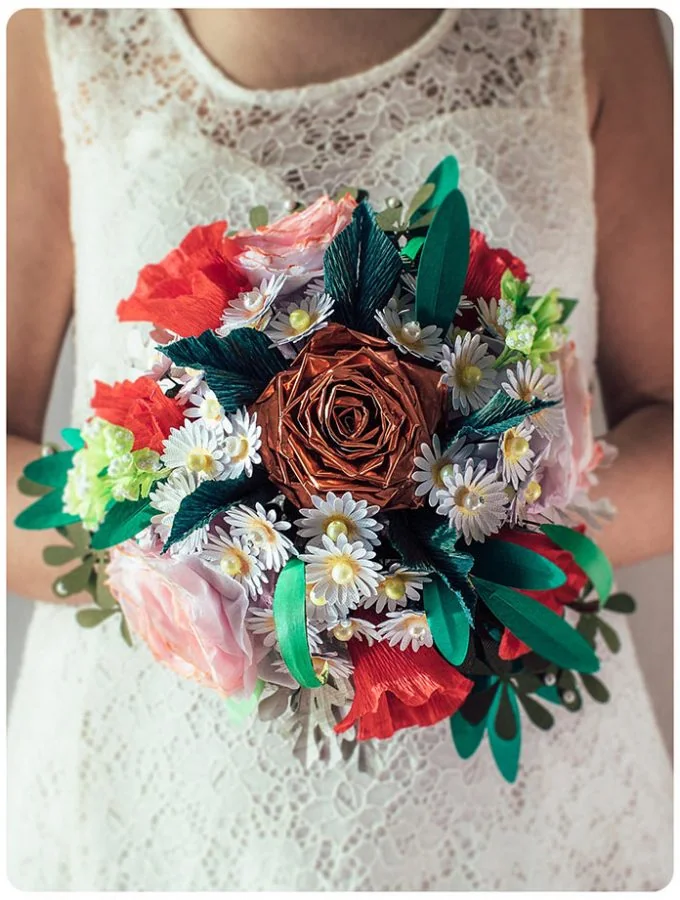
A handmade artificial-flower bridal bouquet with colourful fabric details. Photo: Paolobros2000, Bouquet di Fiori Finti.jpg, CC BY-SA 4.0. Resized and converted to WebP; the image remains available under its original licence. This is an illustrative photograph, not a Vowlinora case study or a photograph of the worked example.
