Venue hire sounds like a single product, but it usually describes a bundle of spaces, permissions, time periods, and services. Two bookings in the same building can mean very different things. Before discussing decorative upgrades, establish what the venue is actually giving you control over. This is a scope exercise, not a guide to negotiating every supplier’s price.
🗝️ Replace attractive labels with boundaries
Ask what phrases such as exclusive use, private grounds, full-day access, and included furniture mean in this particular contract. Exclusive use of the reception room may not include hotel corridors, the garden, or public facilities. Full-day access may begin after the florist needs to arrive. Included chairs may be supplied in storage rather than positioned and removed by staff.
The UK’s Competition and Markets Authority has specifically warned wedding and event venue providers that some advance-payment and cancellation terms may be unfair under applicable consumer law. That warning is UK-specific and does not determine your rights elsewhere. It is a useful reason to read the complete agreement carefully and seek local advice about important terms rather than treating a friendly email as the whole arrangement.
Build a boundary sheet
| Area of agreement | Question | Record |
|---|---|---|
| Physical space | Which named rooms and routes are included? | Annotated plan and shared areas |
| Access | When may suppliers enter and remove equipment? | Start, finish, and any restrictions |
| Labour | Who places, changes, and restores furniture? | Named responsible team |
| Services | Which power, cleaning, and security services are included? | Inclusions and exclusions |
| Changes | How are extra requirements approved? | Written authorization process |
Ask for a plain-language explanation of any item you cannot connect to an actual task. A cleaning allowance might exclude waste removal. A preparation room might need to be vacated before dinner. Outdoor access might be conditional on weather or shared with other visitors. None of these terms is automatically unreasonable, but each changes how the venue can support your event.
An illustrative misunderstanding caught early
Assume a couple books a fictional estate’s ceremony room, dining hall, and courtyard. They imagine that suppliers can arrive in the morning and collect equipment the next day. The draft agreement instead permits access shortly before the ceremony and requires removal that night. Their floral structure and rented audio equipment cannot be delivered and collected within those limits under the suppliers’ current arrangements.
The couple asks whether an extended access arrangement is possible, what it includes, and whether additional supervision is needed. If the answer is no, they can simplify the installation or choose another property before signing. This example uses no real prices and offers no legal interpretation. It shows that the important discovery is a mismatch of operations, not merely an unexpected fee.
Check where responsibilities meet
HSE event-management guidance emphasizes coordinating work activities and sharing relevant safety information. Apply that operational principle by asking who authorizes equipment positions, who manages delivery routes, and who prevents supplier work from conflicting with guest arrival. You are not expected to perform technical assessments yourself. You do need the venue and contractors to agree where their responsibilities connect.
- Request the full agreement and relevant house rules before committing.
- Mark every assumption that is not explicitly supported.
- Send the boundary sheet to the venue for correction and confirmation.
- Share confirmed operational restrictions with affected suppliers.
- Keep an agreed written version when a room, access period, or service changes.
A boundary sheet cannot override a signed contract, and it is not legal advice. If the documents conflict, ask for the conflict to be resolved in the agreement rather than collecting informal reassurance. The best venue arrangement is not necessarily the most inclusive package. It is the one in which both sides understand exactly what is being supplied, what remains your responsibility, and how changes will be handled.
Sources and further reading
Photograph credit
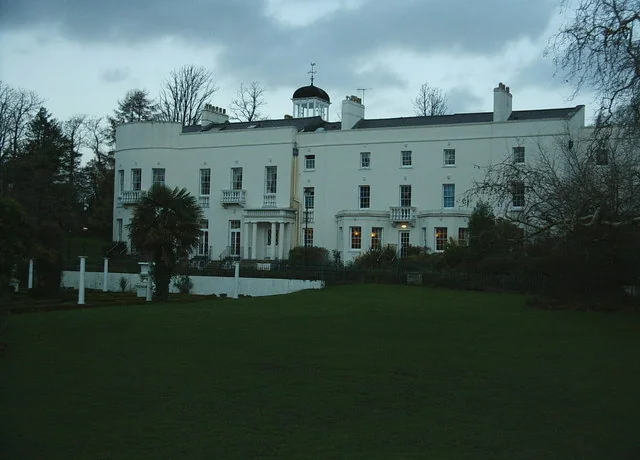
Sketty Hall seen from the surrounding park. Photo: Diane Rawlings, Sketty Hall – early morning from Singleton Park – geograph.org.uk – 295690.jpg, CC BY-SA 2.0. Resized and converted to WebP; the image remains available under its original licence. This is an illustrative photograph, not a Vowlinora case study or a photograph of the worked example.
