A spectacular room can be difficult to hear in. Hard surfaces, background equipment, and music from an adjoining area may make conversation tiring even when the venue looks calm. An empty-room visit will not tell you exactly how a full wedding sounds, but it can reveal questions worth asking. Evaluate speech, entertainment, and respite separately rather than searching for one promise that the acoustics are good.
👂 Ask what guests need to hear
Start with vows, announcements, and speeches. Where will the speaker stand, where will guests sit, and what competing sounds will be present? Ask the venue and audio provider about microphone coverage and any hearing-support systems. A person confidently projecting their voice is not an accessibility plan. W3C recommends good microphone use and attention to participant communication needs; the US Department of Justice describes a range of possible auxiliary aids for covered entities.
Those ADA provisions are specific to applicable US contexts, not international wedding rules. Guests may need captions, interpretation, hearing assistance, written information, or another arrangement. Ask privately rather than assuming age predicts need. The venue should explain what its equipment actually does, who operates it, and whether the proposed supplier can work with it.
Make a room-by-room listening brief
| Area | Ask about | Useful evidence |
|---|---|---|
| Ceremony | Speech coverage and outside noise | Audio provider’s proposed arrangement |
| Dinner | Speeches competing with service | Agreed coordination with catering |
| Dancing | Speaker positions and sound management | Venue restrictions and operator plan |
| Quiet room | Sound spill, seating, and access | Location checked during relevant activity |
Ask whether the room is commonly used for live music or amplified speech and what arrangements the venue normally requires. Historical experience is informative, but it is not a guarantee for your layout. A larger guest count, different speaker positions, or an open connecting door can change conditions. Request a professional assessment where the event’s needs justify it rather than relying on a phone recording.
An illustrative quiet-space problem
Assume a fictional venue offers a lounge beside the dance floor as a quiet room. It has comfortable seating, but its only entrance opens directly toward a loudspeaker. The couple’s walkthrough identifies the relationship, not a measured sound level. They ask whether another room can be made available, whether guests can reach it without crossing the dance floor, and whether it will remain free of storage and staff breaks.
The venue proposes a smaller room farther away with a clear route and a door that can remain closed. The couple describes it as a lower-stimulation space rather than promising silence. That distinction matters: ventilation equipment, nearby guests, and operational changes may still produce sound. The example is illustrative and does not establish that either room meets a particular acoustic or medical standard.
📝 Turn comfort into operational requests
- Ask the audio provider how speech intelligibility will be checked in the actual arrangement.
- Coordinate service and music so important spoken moments do not compete unnecessarily.
- Keep the quiet-space route clear and identify it in guest information.
- Explain whether food, calls, conversation, or children are welcome there so expectations are clear.
- Give guests a discreet contact if the agreed arrangement is not working.
HSE’s event-noise guidance addresses controlling exposure and professional sound management. Do not treat any published maximum as a comfort target or a guarantee of safe listening for every person. The couple’s job is to brief the venue and competent operators, not to establish sound limits with an uncalibrated phone application.
A quiet room is useful only if guests can find it and feel permitted to use it without explanation. Likewise, a microphone helps only if speakers actually use it. Prefer a venue that can discuss these practical details openly. The best answer is not that nobody has complained before; it is a clear account of how your event’s communication and respite needs will be supported.
Sources and further reading
Photograph credit
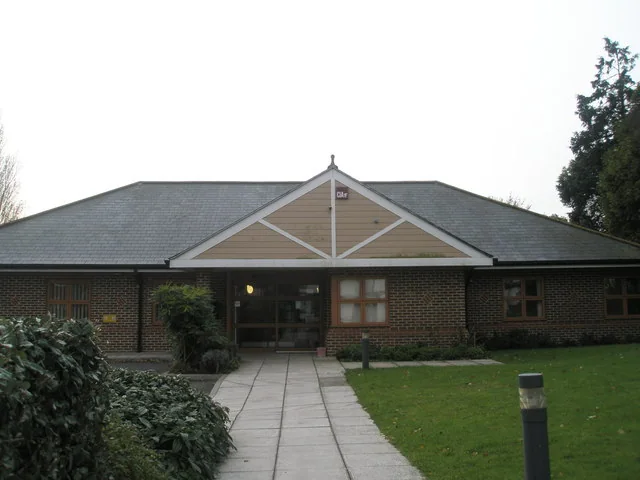
The entrance and exterior of Bedhampton Social Hall. Photo: Basher Eyre, Bedhampton Social Hall – geograph.org.uk – 624918.jpg, CC BY-SA 2.0. Resized and converted to WebP; the image remains available under its original licence. This is an illustrative photograph, not a Vowlinora case study or a photograph of the worked example.
