
A welcoming room is not defined only by what it looks like. Fragrance, background music, flashing effects, crowding, and the availability of a quieter place can influence how guests experience it. You do not need to diagnose anyone or promise a medically safe environment to make thoughtful choices. Begin by reducing avoidable surprises and asking what would support participation.
🌿 Make the request specific
Lower-scent is a more accurate description than fragrance-free when you cannot control every product or guest. Ask the venue about air fresheners, cleaning products, scented candles, and diffusers. Speak to suppliers about any fragranced materials they plan to introduce. If you ask guests to avoid perfume or strongly scented products, explain the request kindly and privately support anyone who raises a concern.
The US Environmental Protection Agency acknowledges that fragrances can cause asthma episodes and other adverse effects in some sensitive individuals, while describing scientific uncertainty around mechanisms. That is a reason for considerate exposure reduction, not a basis for diagnosing symptoms or declaring a product universally safe. Personal medical questions belong with an appropriate clinician, not a wedding checklist.
Use a sensory information sheet
| Element | Ask | Possible action |
|---|---|---|
| Fragrance | What scented products are planned? | Remove optional diffusers and scented decor |
| Sound | When will amplified music play? | Keep a lower-stimulation space available |
| Lighting | Are flashing or moving effects proposed? | Discuss alternatives and inform guests accurately |
| Space | Where can someone take a break? | Provide a clear route and seating |
Keep comfort information separate from a guest’s diagnosis. Guests may find it useful to know that dinner includes background music or that a quiet room is available without wanting to explain why. W3C’s accessible-events guidance encourages asking about access requirements, respecting unanticipated needs, and limiting distractions. It does not establish one ideal sensory environment for every person.
An illustrative fragrance conflict
Assume a fictional couple plans scented candles and a welcome-area diffuser. A guest privately says strong fragrance makes attendance difficult. The couple asks the venue which products can be removed and learns that routine bathroom dispensers are also fragranced. They can remove the optional decorative products and discuss alternatives with the operator, but they cannot truthfully guarantee zero fragrance from all guests and materials.
They give the guest an accurate description of the changes, explain what remains uncertain, and ask whether more information would help. They do not ask the guest to certify the space or pressure them to attend because adjustments have been made. This example illustrates communication and control, not a medical assessment or proof that the resulting environment will be suitable.
📝 Coordinate the request across teams
- Identify optional fragrance sources before ordering decor or welcome items.
- Ask the venue what it can change within its operations.
- Share only necessary instructions with relevant suppliers.
- Describe sound, lighting, and retreat arrangements in plain guest information.
- Give a discreet contact for concerns and allow flexible participation.
A quiet space should not double as a loud staff break room or a busy coat store. Confirm its intended use, route, seating, and availability with the venue. Describe it as lower-stimulation rather than silent unless silence can genuinely be established. People may need to leave and return; do not make a break feel like withdrawing from the celebration entirely.
Resist compensating for one sensory choice with another unasked-for intervention. Replacing fragrance with essential oils is not automatically an improvement, and providing earplugs is not a substitute for appropriate sound management. Ask before assuming that a product marketed for comfort meets a particular person’s needs.
The limitation is control: shared buildings and groups of people are not laboratory environments. Be honest about that. A considerate wedding makes reasonable, concrete changes, provides useful information, and respects a guest’s decision about participation. It does not require guests to prove discomfort or accept reassurance that nobody else has complained.
Sources and further reading
Photograph credit
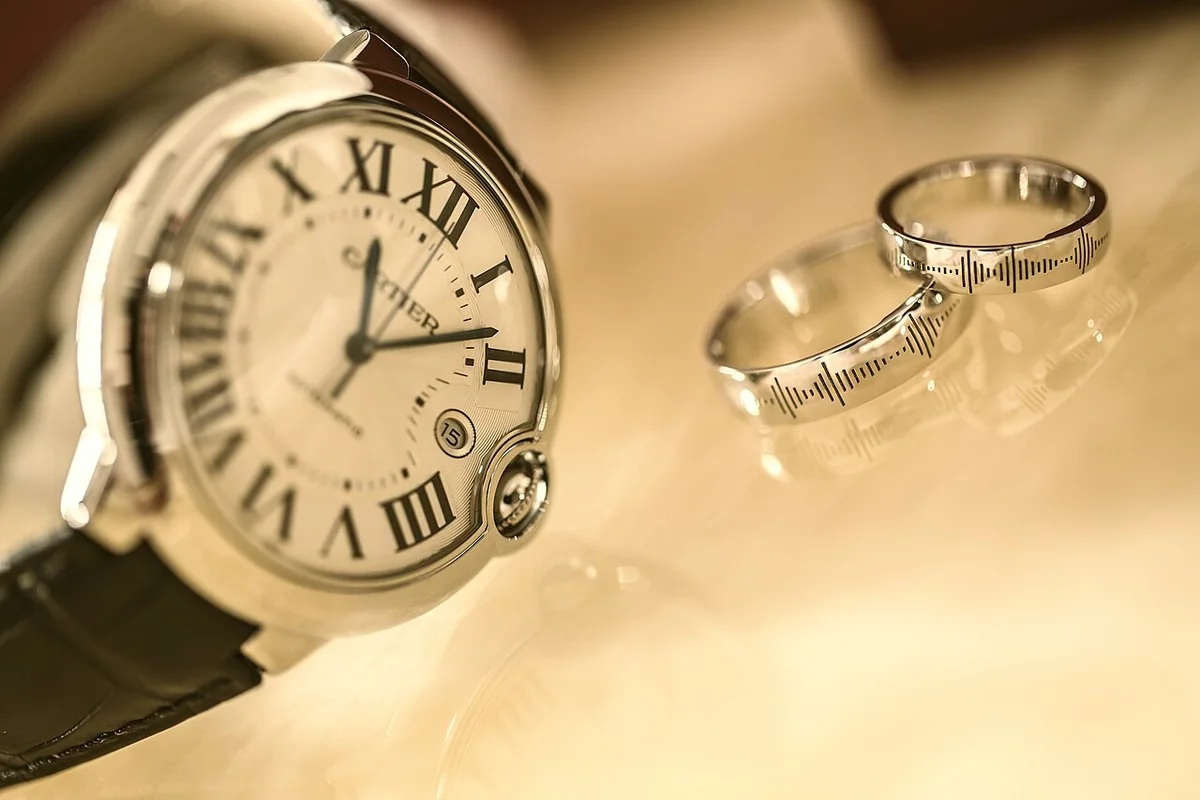
A pocket watch and two wedding bands arranged together. Photo: Thorn Yang thorn, Watch and wedding bands (Unsplash).jpg, CC0. Resized and converted to WebP; the image remains available under its original licence. This is an illustrative photograph, not a Vowlinora case study or a photograph of the worked example.
