
A beloved dog does not need a ceremonial role to belong in your life together. A wedding introduces unfamiliar people, sound, food, travel, and disrupted routines. Decide whether the individual animal is likely to be comfortable before choosing an outfit or planning an entrance. Sometimes the kindest inclusion is a photograph at home or a quiet visit away from the main gathering.
🐾 Begin with the dog you know
Consider how your dog usually responds to crowds, children, applause, other animals, and unfamiliar places. Do not use the wedding as the first experiment with a busy environment. The RSPCA’s body-language guidance describes signs of worry, including lowered posture, turning away, lip licking, and yawning in context. A single signal needs interpretation alongside the whole situation; a wagging tail alone should not be treated as proof of comfort.
The RSPCA also recommends a comfortable, quiet resting place, access to a safe retreat, and an environment free from hazards. Those needs remain relevant during an event. This article is not veterinary or behavior-treatment advice. If you have concerns about health, travel, stress, or suitability, consult the appropriate veterinary or qualified behavior professional before deciding on participation.
Use a welfare-first decision table
| Requirement | Ask | If unresolved |
|---|---|---|
| Venue permission | Which areas and activities are permitted? | Do not assume pet access |
| Responsible handler | Who watches the dog without competing duties? | Choose another form of inclusion |
| Retreat | Where can the dog rest and leave? | Do not rely on enduring the crowd |
| Individual comfort | What signs mean participation stops? | Ask an appropriate professional |
Confirm the venue’s rules in writing and ask about other animals onsite, public access, food service, and restricted areas. A pet-friendly accommodation listing does not necessarily authorize a dog at the ceremony or dinner. Working service animals are a separate issue: US ADA guidance distinguishes them from pets, and applicable provisions depend on context and jurisdiction.
An illustrative participation decision
Assume a fictional dog is comfortable meeting familiar adults in a quiet garden but becomes unsettled by applause and crowded doorways. The couple initially imagines the dog entering during the ceremony. They reconsider when they realize the handler would also be expected to take part in the procession and cannot give the animal undivided attention.
Instead, they arrange a brief, optional portrait with a familiar handler in a permitted quiet area, followed by departure to suitable care. If the dog appears uncomfortable, they skip the portrait. These assumptions illustrate an exit-first approach, not a guarantee of welfare or a recommendation about an actual animal. The photograph is optional; the ability to leave is not.
Write a practical handler brief
- Confirm venue permission and the intended route.
- Choose a capable, willing handler whose attention is not divided by ceremonial duties.
- Provide familiar essentials and appropriate access to water, rest, and toilet opportunities.
- Keep the animal away from unattended food, unsafe decor, and equipment.
- Agree that the handler may end participation without asking the couple during a ceremony.
Avoid making the animal responsible for an irreplaceable object or a precisely timed performance. Secure ceremonial items through a human arrangement and let any pet role remain symbolic. Do not force unfamiliar clothing or accessories for the image, and do not assume a dog must greet everyone who wants contact. Guests should be told to follow the handler’s direction.
The limitation is unpredictability. A dog comfortable during a quiet visit may respond differently once music, crowds, and catering are present. No checklist can promise calm behavior or eliminate risk. A successful decision respects the animal’s established needs and makes absence, early departure, or a completely different form of inclusion feel like a good outcome rather than a failed wedding moment.
Sources and further reading
Photograph credit
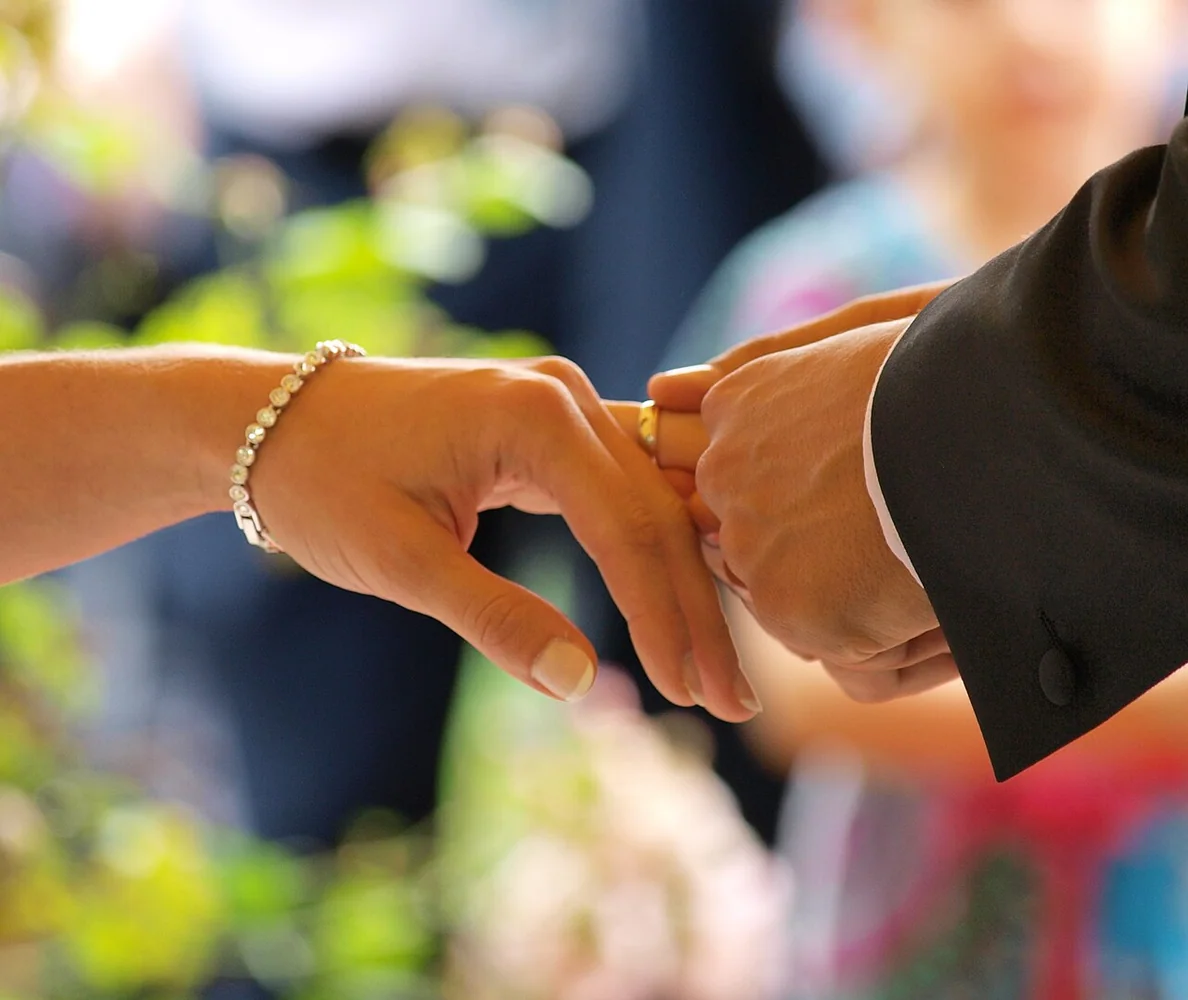
A wedding ring being placed on a finger during a ceremony. Photo: Petar Milošević, Placing a wedding ring.jpg, CC BY-SA 4.0. Resized and converted to WebP; the image remains available under its original licence. This is an illustrative photograph, not a Vowlinora case study or a photograph of the worked example.
