A silhouette name tells you something about a dress’s outline, but little about how a particular gown will feel when you sit for dinner or reach to greet someone. Instead of asking which shape your body is supposed to wear, test the movements your celebration will require.
Maggie Sottero’s alterations guidance explains that samples may be clipped to approximate fit and that final adjustments refine the gown. A clipped sample is therefore useful evidence with limits. It can reveal preferences, but it cannot promise exactly how your ordered and altered dress will move.
👗 Build a movement brief
List the activities you actually expect: sitting for a meal, using steps, entering transport, moving with a mobility aid, reaching for an embrace or dancing. Share the relevant list with the stylist before trying dresses. You do not need to perform a theatrical routine or exceed your comfortable movement.
- Ask how the sample differs from your likely finished fit.
- Stand normally without holding a pose for the mirror.
- Sit on an appropriate chair and remain there long enough to notice the fit.
- Walk and turn within the safe fitting area.
- Try the comfortable arm movements your day requires.
- Discuss any restriction before treating alterations as the solution.
Do not use an unsecured platform or unfamiliar stairs as a test area. Ask the boutique for a suitable place and support. Stop if anything feels painful or unsafe; this is a clothing assessment, not an endurance exercise.
A worked choice between two gowns
Assume an illustrative shopper comparing a fitted skirt with a fuller A-line skirt. Their priorities are independent movement, a seated meal and a short dance set. In this hypothetical comparison, the fitted sample feels easy while standing but requires repeated adjustment when sitting; the fuller sample is comfortable seated but cumbersome when turning.
| Activity | Fitted sample | Fuller sample |
|---|---|---|
| Sitting | Discuss pressure and sample fit | Comfortable in this hypothetical example |
| Turning | Easy within fitting area | Ask about skirt management |
| Arms raised comfortably | Check neckline movement | Check sleeve restriction |
| Next question | Can a specialist assess the restriction? | Can construction be simplified? |
Neither result establishes that one silhouette is universally more comfortable. The useful decision may be to try a third gown with a similar appearance but different construction. A silhouette category should not become a reason to ignore what the actual dress is doing.
Distinguish fit from design
Ask whether a restriction comes from the sample being too small, its fastening, a sleeve shape or the intended design. The answer affects whether a different size, another style or a feasible alteration should be considered. Do not accept “the seamstress will fix it” without a specific assessment.
Try the intended shoes or a comparable height if the boutique permits it. Footwear changes how the hem interacts with the floor, and the manufacturer recommends bringing wedding shoes to alteration appointments. A hem decision should be made with the actual fitting professional.
Check any proposed train-management system with the gown specialist. Ask who will demonstrate it, who will help on the day if needed and whether you can use it comfortably. Do not assume every train can be handled in the same way.
Record what mattered
With permission, take photographs and write short movement notes immediately afterwards. Separate appearance preferences from practical concerns so a beautiful neckline does not erase the memory of an uncomfortable seated position.
A brief appointment cannot reproduce hours of wear, different surfaces or final tailoring. Its useful takeaway is a more informed shortlist: dresses that support your chosen activities, with unresolved fit questions identified before purchase rather than after delivery.
Sources and further reading
Photograph credit
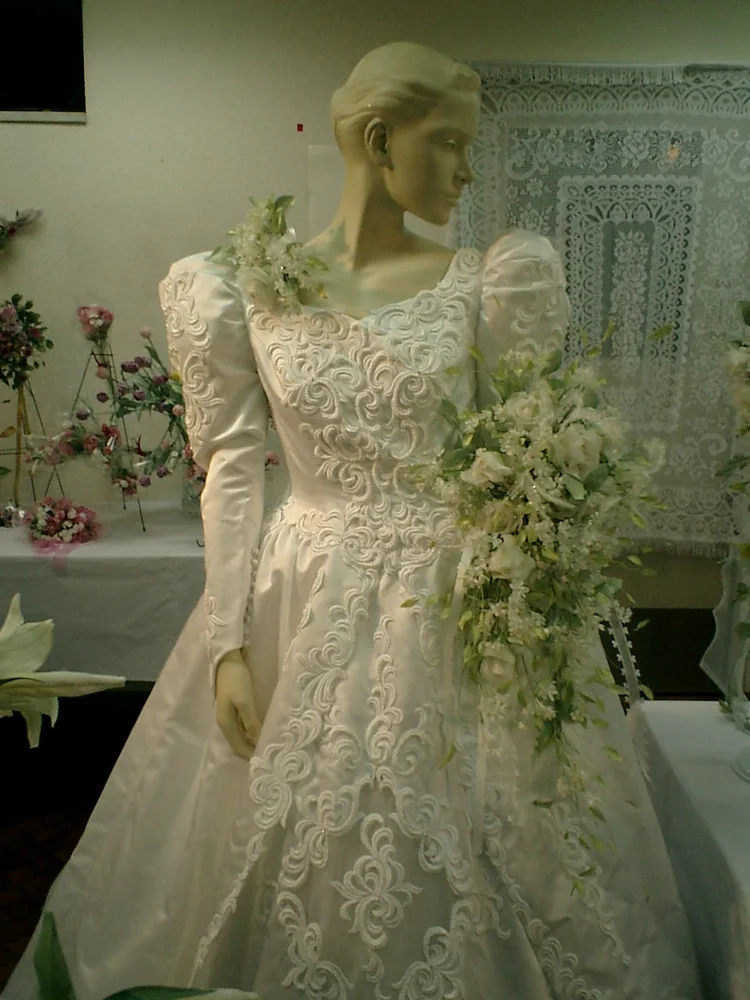
An embellished wedding dress displayed on a mannequin. Photo: User:Mr.ちゅらさん /MASA, Wedding Dress.jpg, CC BY-SA 3.0. Resized and converted to WebP; the image remains available under its original licence. This is an illustrative photograph, not a Vowlinora case study or a photograph of the worked example.
