A rain backup should be a complete version of your celebration, not a place to put wet chairs. Before choosing an outdoor venue, ask to see the alternative with your actual ceremony, catering, access, and guest needs in mind. The most useful question is not whether the venue has a plan B. It is whether you would willingly host your essential moments there.
☔ Separate inconvenience from danger
Light rain, flooded ground, strong wind, heat, and lightning are different problems. A structure that makes a meal more comfortable in drizzle is not automatically suitable shelter in severe weather. The US National Weather Service warns that tents and open-sided picnic shelters do not protect people from lightning. Its guidance recommends getting inside a safe building or suitable vehicle and waiting at least 30 minutes after the last thunder before resuming outdoor activity. Ask the venue to identify actual suitable shelter and how guests reach it; a tent or open-sided picnic shelter is not a substitute.
Ask the venue and competent operators to identify their weather procedures and local guidance. Do not use a forecast percentage as a personal safety threshold or ask a photographer to make the emergency decision. HSE’s event-emergency guidance includes severe weather, evacuation, and clear responsibilities. Your preference for an outdoor ceremony must sit inside those professional arrangements, not override them.
Compare complete experiences
| Question | Indoor room | Temporary structure |
|---|---|---|
| Can everyone participate? | Confirm seating, routes, toilets, and hearing support | Confirm usable surfaces and accessible connections |
| What must move? | Identify furniture already occupying the room | Identify delivery and installation dependencies |
| What weather is it designed for? | Ask about building and route limitations | Ask the competent supplier about operating limits |
| Who activates the change? | Name the venue decision-maker | Name the venue and supplier contacts |
Look beyond the ceremony backdrop. Is there somewhere for arriving guests to remove wet coats? Can a mobility device travel from drop-off to the room without crossing soft ground? Where does catering operate? Does the alternative need additional lighting or audio? Ask whether the space is exclusively available to your event or might already contain another booking.
An illustrative choice between two venues
Assume 60 guests, a garden ceremony, and a seated reception. Venue A offers a small conservatory that seats the group for the ceremony but is also the only meal room. Moving the furniture requires guests to wait outside. Venue B has a less dramatic garden but a separate indoor ceremony room and covered access to dinner. These are fictional arrangements, not assessments of real properties.
The couple identifies a non-negotiable requirement: nobody should have to wait in rain while the room changes. They ask A whether another suitable holding space can be provided. If not, B better supports their event even if A’s sunny photographs are more striking. The decision rests on a specific experience rather than a blanket rule that indoor venues are better.
📝 Agree the change process
- List the essential functions the alternative must preserve, including access and communication.
- Ask the venue when setup choices must be made and which later changes remain feasible.
- Record who monitors conditions, who has authority to stop outdoor activity, and how suppliers hear the decision.
- Prepare accurate guest directions for both arrival routes.
- Confirm any additional services, equipment, and charges in writing rather than assuming they are included.
Separate the aesthetic decision from the emergency response. Choosing indoors early because a room looks better when fully dressed is different from moving urgently because conditions become unsafe. Guests should receive simple instructions, while trained venue staff manage safety procedures. No couple should be negotiating tent limits during a thunderstorm.
There are limits to every backup. Transport disruption may affect arrivals even when the ceremony room is excellent, and extreme conditions may require more than a location change. Ask what happens if neither version can operate. A reassuring venue does not promise control over the weather; it explains its capabilities, limitations, and decision process clearly enough that you can choose without relying on luck.
Sources and further reading
Photograph credit
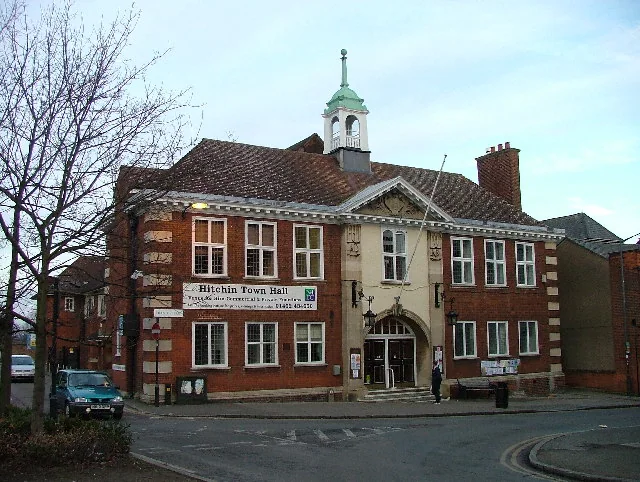
The exterior of Hitchin Town Hall. Photo: Robin Hall, Hitchin Town Hall. – geograph.org.uk – 115500.jpg, CC BY-SA 2.0. Resized and converted to WebP; the image remains available under its original licence. This is an illustrative photograph, not a Vowlinora case study or a photograph of the worked example.
