
A couple-hosted invitation does not need to explain who paid for the flowers or how the families divided the bill. Its central job is to invite specific people to a specific celebration. The wording can be warm, formal or playful while remaining clear about what is happening, where guests should go and how they should answer.
Emily Post’s invitation guidance distinguishes traditional formal wording from more flexible informal wording, while retaining essential event information. Treat that as a useful distinction, not a rule that every family or culture must adopt. You can choose a direct invitation in your own voices without borrowing titles, gender roles or religious language that do not fit.
✉️ Start with the invitation’s promise
Write one plain sentence describing what the recipient is actually invited to attend. For example: ‘We invite you to celebrate our marriage with a ceremony and dinner.’ If the legal ceremony happens privately on another day, describe this event as a wedding celebration rather than implying that guests will witness that ceremony.
Then add names, date including year, start time, venue and location. A complete address can sit on an accompanying details card if space is limited. Avoid making a decorative venue nickname the only location information. International guests may need the city and country even when local friends recognise the building immediately.
| Your situation | Useful opening | Check before printing |
|---|---|---|
| The couple issues the invitation | We would love you to join us | Both names appear prominently |
| You want to acknowledge support | Together with our families | The phrase genuinely feels inclusive |
| Only the celebration is shared | Join us to celebrate our marriage | The event description is accurate |
A worked wording example
For an illustrative fictional event, assume Rowan Lee and Sam Okafor are hosting a ceremony and seated dinner at one venue. Their draft might read: ‘Rowan Lee and Sam Okafor invite you to celebrate their wedding, Saturday 12 June 2027, ceremony at 16:00, Willow Rooms, Bristol, United Kingdom. Dinner and dancing follow. Please reply by 10 April using the enclosed details.’
The date, venue and deadline are illustrative, not recommendations for your own lead time. The couple should verify that the calendar date matches the day, the venue name is correct and the time reflects the actual ceremony. If guests should arrive earlier, put a separate labelled arrival time on the details card instead of quietly shifting the ceremony time.
A less formal alternative is: ‘We’re getting married, and we’d love you there. Please join Rowan and Sam for our ceremony, dinner and dancing.’ Neither version requires an explanation of household finances. Names can appear in the order you agree together; there is no need to assign one person a default leading position.
Build the final text in five passes
- Agree what event and parts of the day the invitation covers.
- Write the factual block before choosing decorative phrasing.
- Choose how, or whether, to acknowledge family involvement.
- Add an unambiguous response method and deadline, plus an alternative contact route.
- Read the invitation aloud and ask a person outside the planning team what they believe they are invited to attend.
That last test often catches omissions that proofreading misses. Someone may understand every word but still assume accommodation is included, children are invited or dinner follows when the invitation never says so. Address those questions through named recipients and accurate event information, not an increasingly complicated opening sentence.
Where flexibility has limits
If relatives have strong expectations, discuss the wording before ordering, not after envelopes are addressed. Cultural and religious conventions can carry meanings that a generic template misses. Ask the relevant family members or celebrant for context, while keeping the couple’s consent central. A specialist translator should review another language rather than simply converting an English etiquette formula.
Keep administrative instructions separate from the emotional opening when possible. A short invitation with a useful details card is usually easier to understand than a single page trying to resolve every practical issue. The takeaway is straightforward: choose a voice that belongs to you, but never let style obscure who is inviting, what is happening or how a guest should respond.
Sources and further reading
Photograph credit
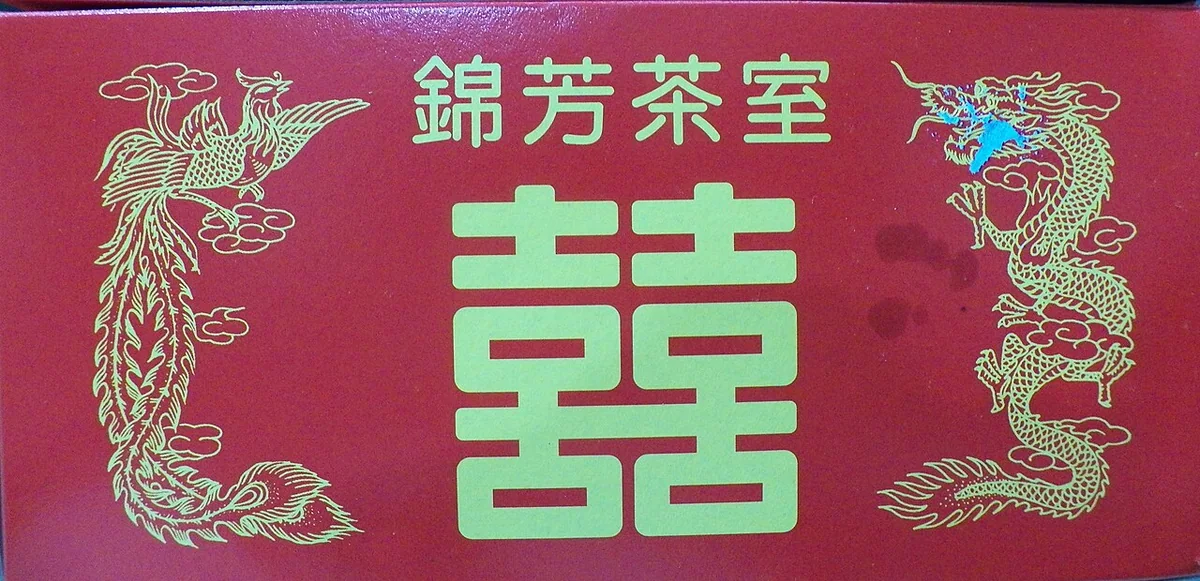
The red and gold cover of a Chinese wedding invitation. Photo: Mizzyjo, Cover of a Chinese wedding invitation card ..JPG, CC BY-SA 3.0. Resized and converted to WebP; the image remains available under its original licence. This is an illustrative photograph, not a Vowlinora case study or a photograph of the worked example.
