An unplugged ceremony can mean several different things: no photographs, no public posting, silent phones, or no devices visible at all. Those are not interchangeable requests. Decide what you actually want before making an announcement. A narrowly explained preference is easier to respect than a sweeping rule that leaves guests wondering whether they may check a message from a carer.
📵 Name the problem you want to solve
If the concern is blocked sightlines, ask guests to keep cameras down during the ceremony. If the concern is public sharing, make a posting request that applies beyond the ceremony. If interruptions are the issue, ask people to silence nonessential alerts. Avoid describing everyone with a device as distracted; some guests may use a phone for communication, captions, magnification, translation, or health-related purposes.
W3C’s event-accessibility guidance specifically notes that participants can have requirements organizers have not anticipated and that recording may sometimes be an access need. It recommends respecting participants’ needs and asking about requirements. The implication for a wedding is not that every device use must be permitted without discussion. It is that a blanket prohibition deserves a private, workable exception process.
Write a request that leaves room for people
| Decision | Clear version | Avoid |
|---|---|---|
| Scope | No guest photography during the ceremony | No phones anywhere, without explanation |
| Reason | Keep sightlines clear and share the moment | Accusing guests of caring only about social media |
| Access | Devices needed for access remain welcome | Requiring public disclosure of a disability |
| Care needs | Step out quietly for an essential call | Confiscating devices |
An original announcement might say: Please keep personal cameras down during the ceremony so everyone has a clear view. Devices needed for communication, access, or care responsibilities are welcome. If you need to take a call, the team can show you a quiet route out. We will explain our photo-sharing preferences separately. Adjust that wording to the actual arrangements rather than using promises the venue cannot support.
An illustrative exception handled discreetly
Assume a fictional guest uses a phone to follow translated ceremony text, while another is awaiting an essential care update. The couple’s aim is to prevent people standing in the aisle with cameras, not to stop those uses. They give the arrival team a simple instruction: do not challenge device use publicly; offer help if someone is blocking a route or filming against the stated request.
The couple also ensures the photographer knows guests may have legitimate devices visible. They do not promise a device-free photograph at the expense of participation. These assumptions illustrate a respectful distinction between conduct and appearance. They are not a statement of universal legal rights, nor a guarantee that every guest will follow the request.
Make compliance easy
- Explain the request before the ceremony, not halfway through a meaningful moment.
- Use one short spoken announcement alongside readable information where appropriate.
- Tell guests when personal photography is welcome again, if applicable.
- Provide a private way to discuss an access need.
- Ask staff to respond calmly to problems without turning the ceremony into enforcement theatre.
If you intend to share professional photographs, confirm with the photographer what you can actually distribute before promising a gallery to everyone. Access to an image and permission to publish it are different questions. EFF’s social-network guidance also reminds users that audience settings, tagging, and location sharing deserve attention; an unplugged ceremony does not resolve later sharing by itself.
The limitation is simple: a request cannot guarantee every frame will be clear or every device silent. Its value lies in setting a considerate expectation. Keep the focus on the shared experience, avoid confiscation or public embarrassment, and judge success by whether people could participate comfortably rather than whether every pocket remained untouched.
Sources and further reading
Photograph credit
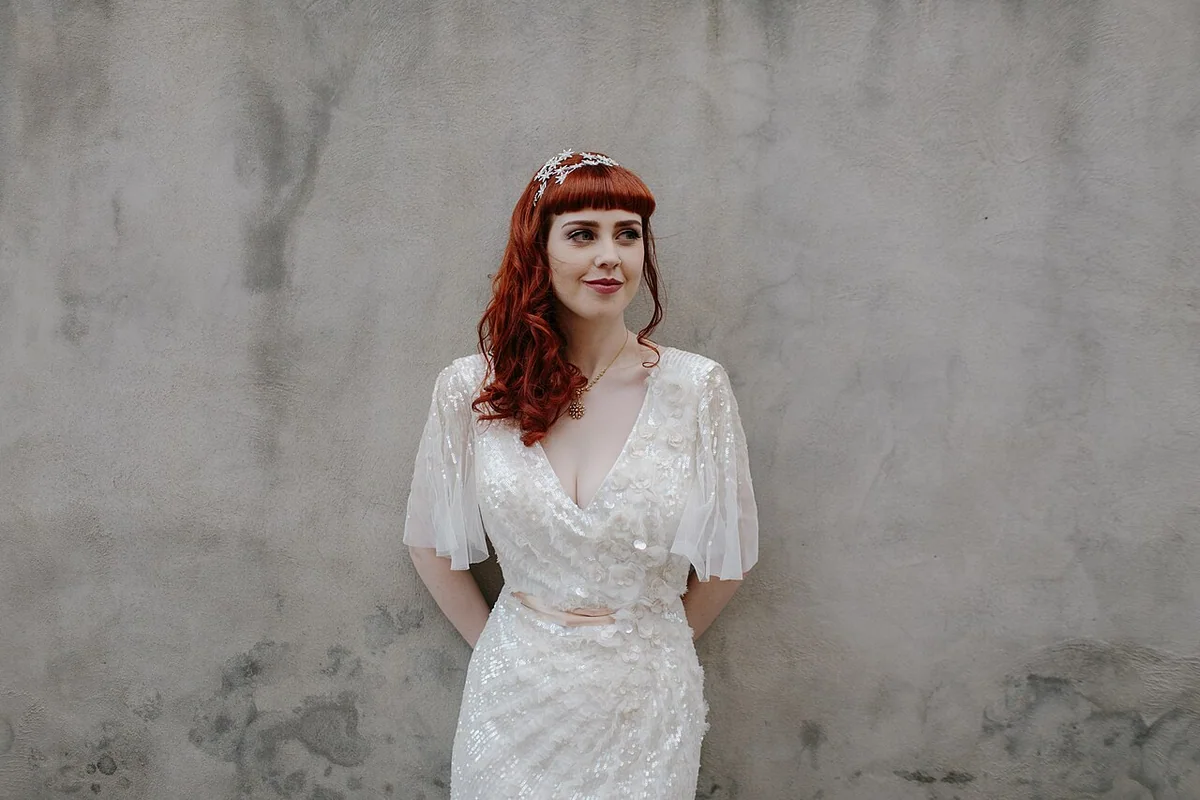
A bride in a lace dress standing beside a pale textured wall. Photo: One Wedding onedayonewedding, One Wedding 2017-05-08 (Unsplash).jpg, CC0. Resized and converted to WebP; the image remains available under its original licence. This is an illustrative photograph, not a Vowlinora case study or a photograph of the worked example.
