
An accessory can look right on its own and create a problem when combined with the dress. A necklace may catch a neckline, a detachable sleeve may change arm movement, or a new shoe may alter the hem’s relationship with the floor. Check the outfit as a system before final alterations.
Maggie Sottero’s accessory guide describes options including veils, capes, bows, overskirts and detachable sleeves. Its alteration guidance recommends bringing relevant wedding-day pieces to fittings. The practical point is compatibility, not a rule that every outfit needs more accessories.
✨ Establish the base outfit
Start with the gown, intended undergarments and shoes. Ask the fitting professional which decisions must be settled before particular alterations. Do not buy several alternative shoe heights and assume the same hem will work equally well with all of them.
- List each accessory and the moment when you expect to wear it.
- Bring relevant pieces to the agreed fitting.
- Check contact points for snagging, pressure or interference.
- Try comfortable sitting, turning and arm movement.
- Practise removal and storage of detachable pieces.
- Record the final combination and who will help if required.
Obtain permission before attaching anything to a boutique sample. Pins, clips and adhesive products can damage garments or change how the sample behaves. Ask staff to demonstrate approved options rather than experimenting independently.
A worked ceremony-to-reception outfit
Assume an illustrative shopper planning a veil and detachable sleeves for the ceremony, then removing both for dinner. They also want earrings and a bracelet. The aim is to preserve one comfortable base outfit while changing selected details.
| Piece | Check with the gown | Handover plan |
|---|---|---|
| Veil | Attachment, movement and contact with decoration | Named helper stores it in agreed packaging |
| Detachable sleeves | Fastening and comfortable arm range | Practise removal with boutique guidance |
| Earrings | Contact with neckline, veil or hair | Keep chosen pair in labelled accessory kit |
| Bracelet | Potential catching against fabric | Omit if it causes repeated interference |
In this hypothetical example, removing the bracelet may solve a practical problem without changing the overall look. Compatibility checks should make simplification possible, not generate a shopping list of replacement pieces.
Test the transitions
Ask how detachable elements are fastened and whether repeated removal is intended. A piece described as detachable may still require assistance or careful handling. Confirm whether the alteration specialist needs to add or adjust attachment points and whether that work is included.
Practise the transition in a suitable fitting environment. Where will the removed sleeves go? Who carries the veil? If the answer is someone unspecified, the change is not yet a complete plan. Agree help without assuming a guest has volunteered for an ongoing dressing role.
Check the shoes during sitting and walking as well as standing. Bring any planned alternative footwear to the specialist’s attention before the hem is finalised. Comfort preferences are individual, and this article does not prescribe a heel height or footwear type.
Keep the final version clear
Photograph the approved combination with permission and create a concise packing list. Distinguish worn, spare and deliberately omitted items so a helper does not add an earlier option because it remains in the box.
If you are borrowing jewellery or another personal piece, confirm care and return arrangements with its owner. Do not assume a borrowed item can be altered, cleaned or exposed to products used on hair or fabric without permission.
A fitting cannot reproduce every hour of wear, and a short compatibility check is not a durability guarantee. Inspect fastenings and follow the relevant care instructions before use.
The useful takeaway is one workable outfit with understood transitions. Every accessory earns its place by supporting the look and the day, rather than merely matching an inspiration photograph.
Sources and further reading
Photograph credit
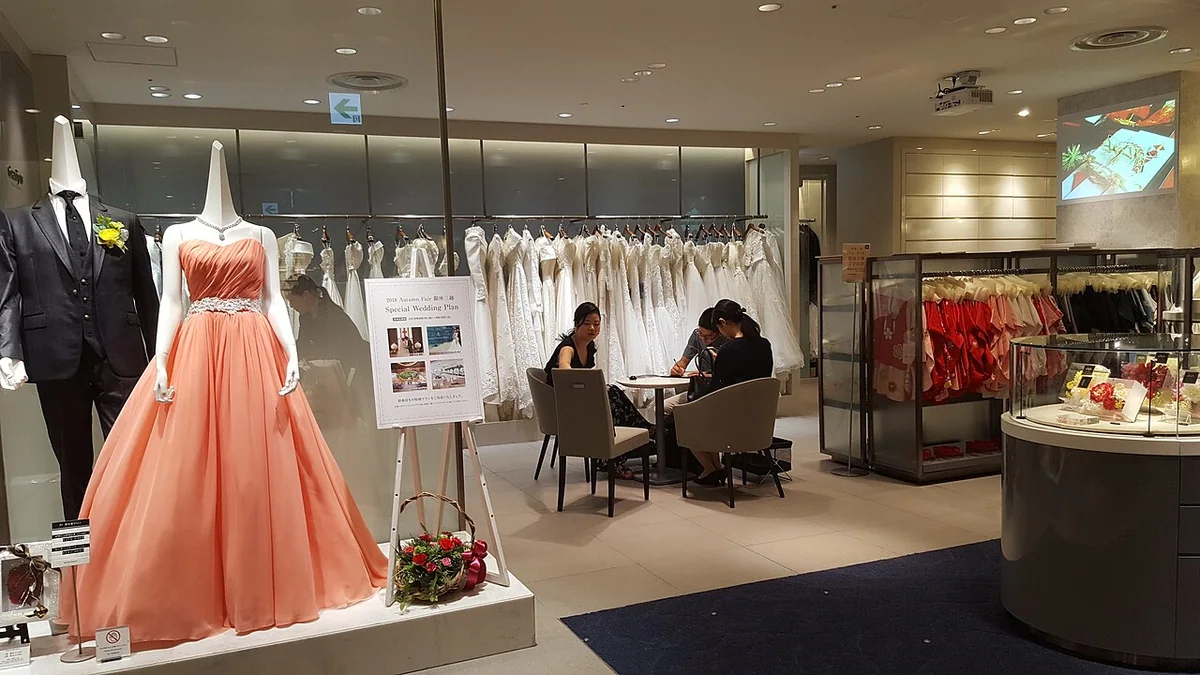
Wedding dresses and formalwear displayed inside a bridal shop. Photo: flarthurhu from Rochester, MN, USA, Special Wedding Plan (44305113061).jpg, CC BY 2.0. Resized and converted to WebP; the image remains available under its original licence. This is an illustrative photograph, not a Vowlinora case study or a photograph of the worked example.
